
How we work
A four-phase, measurement-based project process
The costliest mistake in hardware and software projects is proceeding on unverified assumptions. For this reason, in every project we first bring the critical path to a working state on the target hardware, measure it, and base decisions on that data. A defined output is delivered at the end of each phase.
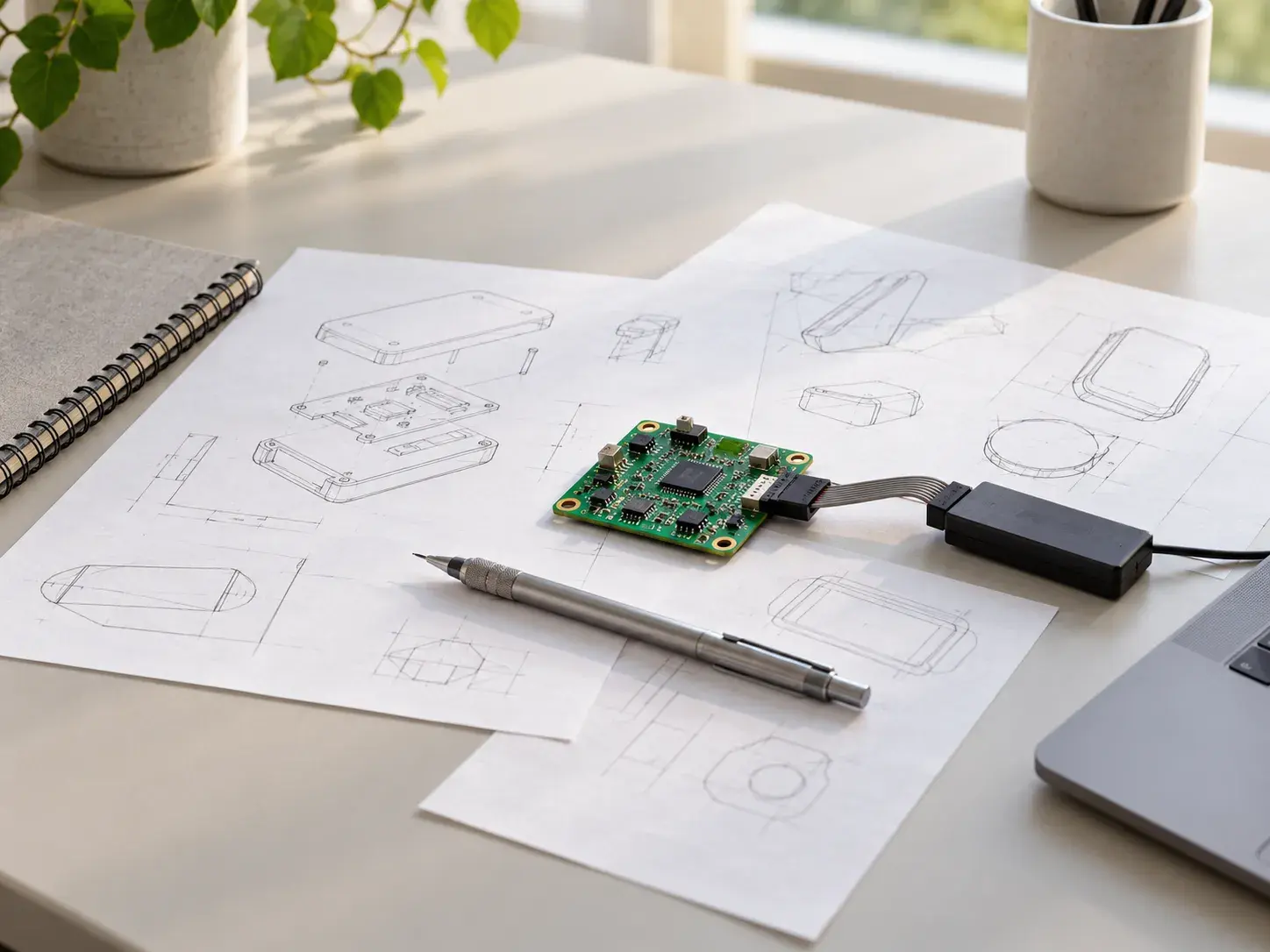
Discovery and scope
The device, goals and constraints are assessed. Technical risks and unknowns are listed; scope, assumptions and success criteria are put in writing. Any part of the project outside our area of expertise is stated clearly at this stage.
Output
Scope document and risk list
Prototype on target hardware
The most critical path of the project (for example sensor to data, or device to application) is brought to a working state on the target hardware. The prototype is verified in a setup close to real field conditions rather than in simulation.
Output
Working prototype and measurement setup
Measurement and decision
Prototype measurements (latency, power consumption, stability, unit cost) are reported and reviewed together. The decision to continue, revise or stop is based on this data.
Output
Measurement report and decision note
Delivery and handover
Source code, technical documentation, test setup and installation steps are delivered. The handover is planned so that your team can maintain the system independently.
Output
Source code, documentation, test setup
Working principles
Verification on target hardware
Critical functions are verified by measurement on the target hardware, not by simulation.
Handover-ready delivery
All delivered components are documented so that the client team can read, install and further develop them.
Regular reporting
A weekly status report is shared throughout the project; risks and deviations are communicated as soon as they arise.
Let's discuss your project
In a 30-minute introductory call we assess your project and goals, and share a suitable approach.